However, Eduardo Kac's fluorescent bunny struck me as interesting because of the controversy that surrounded it, yet a company called GloFish® currently creates and sells fluorescent fish for recreational aquariums and I have heard little controversy around that. In fact, I helped set up a 10 gallon tank with one GloFish Tetra and numerous other fish currently in my girlfriend's dorm at UCSB.

This picture has no filter. GloFish use that same gene mentioned in lecture from jellyfish.
However, they were banned in California (and only California) for a number of years and made illegal because the Fish and Game Commission in 2003 decided that they were created using a trivial use of powerful technology. Recently, they were made legal as the genetically modified fish do not pose no threat to natural wildlife populations. It seems that slowly but surely, efforts by Eduardo Kac and others like the GloFish company have caused people to realize that this technology isn't something to be afraid of.
One topic I did not notice in lecture was the use of steroids in bodybuilding. Bodybuilding, unlike Powerlifting or Olympic Weightlifting, is really a sport that focuses on the aesthetic, literally turning the human body into a piece of art with muscle growth and enhancement. But, the human body has a limit to the amount of muscle it can build, which is where anabolic steroids come in, biologically enhancing someone's ability to synthesize muscle.

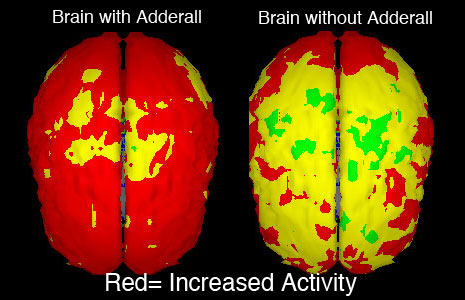
Steroids are illegal, but this is interesting when other enhancement drugs, like the use of amphetamines like Adderall is perfectly okay, even though the health effects of both are still under debate. Adderall prescriptions are much more common than those for anabolic steroids, and people abuse both, but as the documentary "Bigger, Stronger, Faster" points out, one is much more frowned upon than the other. It really calls into question what we see as normal and what isn't, and my theory rests on the fact that things that are tangible, like muscles, are easier to see and therefore people take enhancements in that area more seriously, while Adderall's enhancements can't really be seen just visually.
Sources:
1. Bigger Faster Stronger. Dir. Christopher Bell. Perf. Christopher Bell, Mark Bell, Michael Bell. Madman Films, 2008. Documentary.
2. Starr, Barry. "Lighten Up, California: Why GloFish Can't Glow in the Golden State." QUEST. N.p., 11 Feb. 2013. Web. 7 May 2015.
<http://science.kqed.org/quest/2013/02/11/lighten-up-california-why-glofish-cant-glow-in-the-golden-state/>
<http://science.kqed.org/quest/2013/02/11/lighten-up-california-why-glofish-cant-glow-in-the-golden-state/>
3. Talbot, Margeret. "Brain Gain - The New Yorker." The New Yorker. New Yorker, 27 Apr. 2009. Web. 8 May 2015.
<http://www.newyorker.com/magazine/2009/04/27/brain-gain>
<http://www.newyorker.com/magazine/2009/04/27/brain-gain>
4. "U.S. Food and Drug Administration." Genetically Engineered Animals. N.p., n.d. Web. 14 May 2015. <http://www.fda.gov/AnimalVeterinary/DevelopmentApprovalProcess/GeneticEngineering/GeneticallyEngineeredAnimals/default.htm>
5. Vesna, Victoria. "5 BioArt pt 1” YouTube Lecture. YouTube,
17 May 2012. Web. 6 May 2015.
<https://www.youtube.com/watch?v=jUENH6GLzXY>
<https://www.youtube.com/watch?v=jUENH6GLzXY>

No comments:
Post a Comment