Sunday, May 31, 2015

Event Blog Post 2

Some time ago, I visited LACMA's Art + Technology Lab to attend a film screening of "Two Holes of Water," a performance piece by artist Robert Whitman created for "9 Evenings: Theatre & Engineering," a series of innovative dance, music, and theater performances held at the 69th Regiment Armory in New York City in October of 1966. 

Here's me with a cool hashtag I found near the TV where they screened the films

The film documented Whitman's work for 9 Evenings.  which was the result of collaborations between artists and engineers from Bell Telephone Laboratories. Whitman’s performance features a live mix of seven cars with film, television projectors, and a live fiber-optic camera on the Armory floor. First, we were shown actual footage from the event. It started out with cars starting and driving inside the armory slowly, and soon after a voice was heard over speakers, and with the tremendous echo it was difficult to hear what was being said.  The car's engines were incredibly loud as well, something that is familiar to me as I actually own a VW Beetle from 1966, the same year of this production. Projections behind the cars showed all sort of things in them, from people putting on clothes or brushing hair to images of animals running across open land.  A lot of the images were distorted, reflected, and superimposed on each other. I'll be honest, I don't think I, or anyone in the room, knew exactly what was going on in the film. Below, you can see the cars and the projections behind the cars inside the armory. 
Some photography of the actual event which was shown
However, as I soon learned, that was somewhat the point it seemed. After we were shown the actual footage from the event, people involved in the event, including Robert Whitman himself, explained their preparation for the piece. Artists and Engineers worked for months in order to devise the equipment to be used, which included a lot of brand new state-of-the-art technology for 1966. It turns out the projections of the seemingly random things were, according to Robert Whitman, supposed to be somewhat random and everyday things (like the woman brushing her hair or other simple motions). They also used closed-circuit television, and the actors were back stage and filming it while it was being projected using over-the-air technology. They also used fiber-optic cameras in their filming.
Robert Whitman actually said he did not really understand (or care too much) about what the engineers were doing to help accommodate the product, which surprised me a lot. He also said that the voice over the loudspeaker was supposed to be distorted and difficult to hear, and in addition he explained that he achieved his strange reflective visual effects by having multiple cameras filming the same person and having the images superimposed. Also, a person who was inside one of the driving cars was interviewed, and he admitted he did not know what was going on, and that he had actually turned on his projections upside down on accident!
Based on what Robert Whitman was saying casually about the project, my mind immediately flew to a piece described in lecture during the week of Robot+Art, "Faraday's Garden" by Perry Hoberman (1990). Instead of being total chaos, however, the piece reminded me of driving down the street in a car, and seeing people, animals, billboards, and other visual stimuli that is almost overwhelming to the point you don't know what is going on. Hence the loud voice, loud car engines, and pretty random video that was distorted, reflected, superimposed, et cetera.
A selfie I took with a director at the Art and Tech lab at LACMA that helped put on the film screenings
Overall, I would definitely recommend the event, and if you can find some footage from the original piece you should check it out. The mere act of trying to decipher what is going on seems to cause your brain to have trouble taking it all in, causing a frustration that I think Robert Whitman was trying to demonstrate with the way the world was changing in the 60s as booming technology started to offer so much stimuli it would be overwhelming to those not used to it.

Sunday, May 24, 2015

Event Blog 1

Recently, I went to a panel discussion about rivers at the Billy Wilder Theater in the HAMMER Museum near campus. With California in a historic drought, this discussion seemed to me very relevant to the times, and as it was a recommended event to attend, I decided to attend.
The panel discussing!

The panel featured Steve Fleischli, Director of the Water Program at the Natural Resources Defense Council (NRDC) and hydrologist Dennis Lettenmaier, who is  UCLA Professor of Geography. Steve Fleischli spoke mostly about about some harms to our waterways in terms of drought, pollution, and habitat loss. He stated that fewer than 40% of the world's longest rivers are free of man made obstructions, and while rivers are very important, they tend to be contaminated with what he calls "urban slober," or run off waste. He showed us a variety of provocative images, including the one below:
Picture of the screen I actually took, image below is what was shown.


This is called nutrient pollution, where algae can bloom and remove all of the oxygen from the water, making it inhabitable for a lot of wildlife. Interestingly enough, Steve pointed out that there are swimming pools at almost all of the houses that are on the water line. It's powerful to see that people are using their swimming pools over the lake right besides them because of nutrient pollution. 

Next up was UCLA Professor of Geography Dennis Lettenmaier. Honestly, he did not show us much imagery and things of that nature, and so his presentation was not so relevant to this class. 
That's him behind me on a livestreaming screen, since I wasn't allowed to take a selfie inside the theater

Rather, he showed us data on droughts and tried to explain that it wasn't a "water usage" problem, and it's not a matter of how much water people use, because water is a renewable resource which means even if we use it a lot, we can get it back. He explained further that it is a water allocation issue, and that where we take water from and where we put it matters a lot in preventing drought situations.
Provocative imagery being used to demonstrate an argument for political reasons

Honestly, I really enjoyed the event, but it did not seem all that relevant to this class, which was surprising since it was a recommended event to attend. I did, however, think of "The Work of Art in the Age of Mechanical Reproduction" by W. Benjamin, where he explained that mechanical reproduction of art, in this case photography, can be used for political reasons. Here we were being shown provocative photographic documentation and artwork in order to get people interested in supporting policy change. I would recommend this kind of event for other people to attend but just for their own personal knowledge of how they can help stop droughts and improve the policy regarding freshwater protection and allocation, but not necessarily for this class. 


Sunday, May 17, 2015

Neurosci and Art

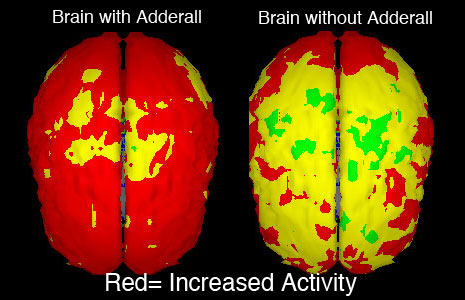
The fact that Sigmund Freud was a cocaine addict is very interesting, because after studying about him so many times in different psychology and history classes, that fact was always left out of the textbooks. Last week, I discussed the use of Adderall, and I believe it applies here too. We can connect this to the first week animation video by Ken Robinson, where he claims the ADHD epidemic isn't real, and references the use of drugs like Adderall and Ritalin in children to help fix a broken education system. Adderall is an amphetamine, just like methamphetamine and maybe sometime in the future we will think about the use of Adderall in the same way we think of those in the past and their use of cocaine.


Continuing on the topic of drugs, Bryan Lewis Saunders, an adventurous artist, drew self portraits of himself on different drugs. One of which is found below, while he was on psilocybin mushrooms.

Check out the whole collection of this project in the number 3 citation! 
I found this piece very striking, as it shows not just the change in perception drugs have, but that individuals interpretation of their change in perception while using. It is fascinating to think that there are different worlds of perception and consciousness that the human mind is capable of while influenced by different substances, and how capable our mind is, while not forgetting how fragile the chemistry is (that such a small amount of this kind of smoke or just one or two some other pill can completely change your outlook on reality).

Finally, the lecture questions on dreams had me researching dreams until I came onto the topic of lucid dreaming. This is a state where, inside a dream, the dreamer is lucid and aware of their state in a dream, and can exercise control on their surroundings and imaginary experiences. Somewhat like the movie Inception.

When Dr. Stephen LaBerge of Stanford University studied lucid dreaming he found that the subjective experience of time was the same as waking life while in a dream, the activation of the right and left brain was the same when singing and counting, respectively, in both lucid dreaming and waking states, and that the physiological effects of lucid dreaming sex, sexual arousal and orgasm matched real life. It really calls into question what roles our conscious, sub conscious and unconscious states play on our interpretation of reality when dreams can mimic real life so well, except that we can have complete control.

Cites:
1. "Ritalin and Cocaine: The Connection and the Controversy." Ritalin and Cocaine: The Connection and the Controversy. The University of Utah, n.d. Web. 16 May 2015.
<http://learn.genetics.utah.edu/content/addiction/ritalin/>

2. Majoy, Benajmin. "GETTING ABILIFIED WITH BRYAN SAUNDERS | VICE | United States." VICE. Vice Media, 9 Feb. 2011. Web. 15 May 2015.
<http://www.vice.com/read/getting-abilified-with-bryan-saunders>

3. Short, April M. "30 Self-Portraits Drawn While the Artist Was Under the Influence of 30 Drugs." Alternet. N.p., 04 Apr. 2014. Web. 12 May 2015.
<http://www.alternet.org/drugs/30-self-portraits-drawn-while-artist-was-under-influence-30-drugs>

4. Blackmore, Susan J. "Lucid Dreaming: Awake in Your Sleep" Skeptical Inquirer 15 (1991): 362-370. Print. <http://www.susanblackmore.co.uk/Articles/si91ld.html>

5. Vesna, Victoria. "Neuroscience pt3” YouTube Lecture. YouTube, 16 May 2012. Web. 15 May 2015. 
<https://www.youtube.com/watch?t=12&v=E5EX75xoBJ0>

Sunday, May 10, 2015

Biotech and Art

Biotech and Art immediately struck me as an extremely controversial topic even before I watched any lectures, and the lectures only reinforced that idea. 

However, Eduardo Kac's fluorescent bunny struck me as interesting because of the controversy that surrounded it, yet a company called GloFish® currently creates and sells fluorescent fish for recreational aquariums and I have heard little controversy around that. In fact, I helped set up a 10 gallon tank with one GloFish Tetra and numerous other fish currently in my girlfriend's dorm at UCSB. 


 This picture has no filter. GloFish use that same gene mentioned in lecture from jellyfish. 
However, they were banned in California (and only California) for a number of years and made illegal because the Fish and Game Commission in 2003 decided that they were created using a trivial use of powerful technology. Recently, they were made legal as the genetically modified fish do not pose no threat to natural wildlife populations. It seems that slowly but surely, efforts by Eduardo Kac and others like the GloFish company have caused people to realize that this technology isn't something to be afraid of.  

One topic I did not notice in lecture was the use of steroids in bodybuilding. Bodybuilding, unlike Powerlifting or Olympic Weightlifting, is really a sport that focuses on the aesthetic, literally turning the human body into a piece of art with muscle growth and enhancement. But, the human body has a limit to the amount of muscle it can build, which is where anabolic steroids come in, biologically enhancing someone's ability to synthesize muscle. 

 Steroids are illegal, but this is interesting when other enhancement drugs, like the use of amphetamines like Adderall is perfectly okay, even though the health effects of both are still under debate. Adderall prescriptions are much more common than those for anabolic steroids, and people abuse both, but as the documentary "Bigger, Stronger, Faster" points out, one is much more frowned upon than the other. It really calls into question what we see as normal and what isn't, and my theory rests on the fact that things that are tangible, like muscles, are easier to see and therefore people take enhancements in that area more seriously, while Adderall's enhancements can't really be seen just visually. 


Sources:

1. Bigger Faster Stronger. Dir. Christopher Bell. Perf. Christopher Bell, Mark Bell, Michael Bell. Madman Films, 2008. Documentary.

2. Starr, Barry. "Lighten Up, California: Why GloFish Can't Glow in the Golden State." QUEST. N.p., 11 Feb. 2013. Web. 7 May 2015.
 <http://science.kqed.org/quest/2013/02/11/lighten-up-california-why-glofish-cant-glow-in-the-golden-state/>

3. Talbot, Margeret. "Brain Gain - The New Yorker." The New Yorker. New Yorker, 27 Apr. 2009. Web. 8 May 2015.
<http://www.newyorker.com/magazine/2009/04/27/brain-gain>

4. "U.S. Food and Drug Administration." Genetically Engineered Animals. N.p., n.d. Web. 14 May 2015. <http://www.fda.gov/AnimalVeterinary/DevelopmentApprovalProcess/GeneticEngineering/GeneticallyEngineeredAnimals/default.htm>

5. Vesna, Victoria. "5 BioArt pt 1” YouTube Lecture. YouTube, 17 May 2012. Web. 6 May 2015.
<https://www.youtube.com/watch?v=jUENH6GLzXY>